Why Gen Z Is Nostalgic for a Past They Never Lived
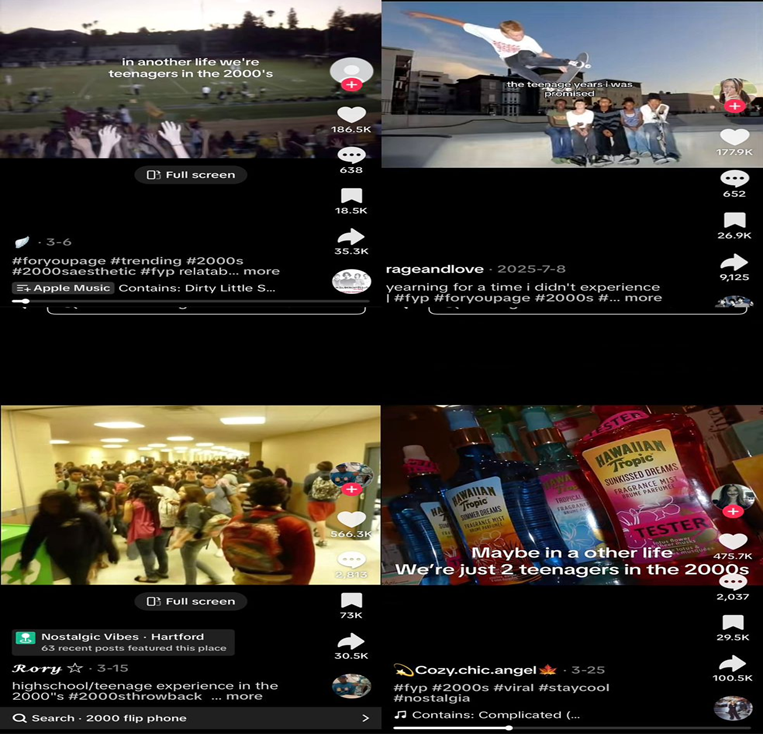
Scroll through TikTok and it does not take long to notice the pattern. Videos tagged with “2000s nostalgia” and rack up millions of views, featuring flip phones, grainy cameras, and early internet sounds. Much of this content is created and consumed by Gen Z users who were too young to remember the era or were not yet born.
The trend points to a broader shift: Gen Z appears increasingly nostalgic not only for its own childhood, but for decades it never experienced. In that sense, Gen Z may be the first generation to feel nostalgia without memory.
A generation raised on archived memory
Unlike previous generations, Gen Z grew up with immediate access to vast digital archives. Streaming platforms, social media, and online forums have made cultural artifacts from past decades constantly available.
Psychologist Zuhal Alnajar describes this as “second-hand nostalgia,” where emotional connections form through repeated exposure rather than lived experience. “When people are constantly engaging with images, music, and stories from a certain time,” she says, “those elements begin to feel familiar, even if they were never personally experienced.”
“Over time, this exposure can begin to replace memory,” she adds. “People start to attach emotion to things they did not personally experience, simply because they associate them with comfort and familiarity.”
Data supports this shift. According to GlobalWebIndex (GWI), around 37% of Gen Z report feeling nostalgic for the 1990s, a decade many are too young to remember, or were not yet born into.
This helps explain why many young people are drawn to shows like Friends or early 2000s fashion trends like the Y2K style. These eras are less remembered than continuously re-encountered through media. Shows like Stranger Things, set in the 1980s, have also played a key role in shaping this interest. The series attracted a large Gen Z audience and helped reintroduce older music and fashion trends to a younger generation, reinforcing nostalgia for a pre-digital era.
Why nostalgia feels stronger now
According to (GWI), Gen Z leads the nostalgia trend, with around 50% saying they feel nostalgic for media, more than any other generation. Researchers link this rise to recent instability, including disruptions caused by the COVID-19 pandemic and ongoing economic pressures such as rising living costs. For younger people entering adulthood, these conditions have made the present feel uncertain, increasing the appeal of earlier, more familiar eras.
As a result, many young people are not just engaging with the past, they are turning to it as a form of comfort.
Constant documentation has also reshaped how Gen Z experiences the present. Social media turns everyday moments into curated highlights, making it easy to compare one’s life to an endless stream of polished images.
This environment can make the present feel insufficient, reinforcing the appeal of the past. In contrast, older media, whether shows like Friends or early 2000s films, offers contained, predictable narratives, where problems feel simpler and easier to resolve.
The appeal of a “simpler” time
For many Gen Z users, the past represents something their present often lacks: simplicity.
Pre-digital eras are often imagined as slower, more authentic, and less overwhelming. Whether accurate or not, this perception plays a key role in nostalgia’s appeal.
According to a 2023 Harris Poll survey, conducted in partnership with The Guardian, 60% of Gen Z adults said they would prefer to return to a time before widespread digital connectivity, reinforcing the appeal of a pre-digital “simpler” life.
For Sara Ghassan, a third-year pharmacy student, the appeal is more personal. “Whenever I feel stressed, I go back to older shows and movies,” she says. “it just instantly makes me feel better and the vibe calms me down, even if I just have them on in the background.”
For her, the past functions less as memory and more as comfort.
More than just a trend
While nostalgia-driven content may seem like a passing trend, its scale suggests something deeper about how Gen Z is responding to modern life.
In a fast-paced, highly connected environment, the past offers a sense of stability, predictability, and emotional comfort.
For Gen Z, nostalgia is not just about looking back, it is about coping with the present.
And in many cases, it is not the past itself that matters most, but what that past seems to offer: a slower, simpler, and more grounded way of living.