From Scroll to Self-diagnosis
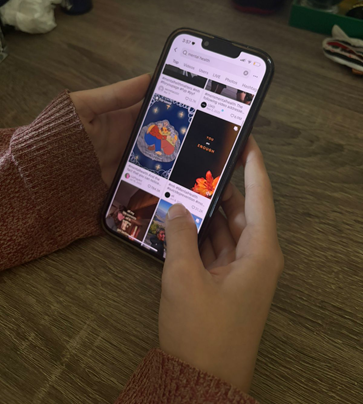
It starts with a casual “5 signs you have ADHD” Then the algorithm takes over. One video turns into five, each one more relatable and convincing. Difficulty focusing? Procrastination? Burnout? For many Gen Z users these clips that offer relatability also offer a diagnosis.
Across platforms like TikTok and Instagram, mental health content has become both accessible and highly relatable. There has been a shift in how social media users understand and label their emotions, with many turning to social media as a primary source of information. The result is a growing culture of self-diagnosis, which refers to individuals identifying mental health conditions based on content they view online, making a diagnosis without consulting a healthcare professional.
Self-diagnosis sits at the intersection of awareness and misinformation. Social media content often condenses complex mental health illnesses into simplified, symptom-based, emotionally engaging content that might not be accurate. Nehad Hani Metawie, personal counsellor at AUD revealed, “[students] often relate really quickly to those ‘5 signs you might have…’ posts and start using diagnostic terms in everyday language like, ‘I’m so OCD’ or ‘That’s my ADHD’, or ‘I’m having a nervous breakdown..’ The issue is that social media content is usually super engaging emotionally. It also misses the full context, so you’re not getting the whole clinical picture.”
Since social media algorithms promote content that drives engagement, users are likely to continuously encounter similar topics or themes creating echo chambers. Metawie observed, “it is also driven by algorithms so you keep seeing more of what you already relate to.” This repetition of content can further push the idea that certain symptoms or behaviour are more indicative of a disorder than they actually are, particularly when the content is frequent and relatable.
The issue of self-diagnosis is not the misinterpretation of users’ feelings, but rather how they are framed. Short form content on social media does not provide the context necessary for an accurate diagnosis, including factors such as severity, duration, and impact on daily life. Metawie noted, “Social media does play a significant role in blurring the line between normal human experiences and clinical mental health conditions.”
Mental health content can lead to the trivialization or romanticization of certain illnesses. This shift can narrow how individuals interpret normal emotional experiences where “common experiences like feeling nervous before an exam or preferring to be organized may be interpreted as anxiety or OCD.” Metawie added, “at the same time, complex conditions can be simplified into “easy to relate to” traits, which can make them seem less serious than they really are.”
According to Metawie, the shifting perception of emotional normality, “may also reduce their tolerance for everyday stress and make it more difficult to distinguish between what is part of a normal range of emotions and what may require professional support.” This creates a sort of grey zone, where self-identification of a diagnosis feels immediate, but understanding it remains incomplete/ or misinterpreted.
The most common conditions to be self-diagnosed are ADHD, OCD, Anxiety, and Depression. Traits like distraction, procrastination, and restlessness are widely shared experiences that have become associated with ADHD. The reframing of such behaviours encourage users to interpret everyday struggles through a diagnostic lens. Metawie observed, “So it can quickly turn into a ‘this explains everything’ moment. Social media also sometimes presents it as more of an identity.”
This leads to an increase in inaccurate self-diagnosis. Depression is often referenced particularly in discussion around burnout and high functioning depression. When presented through simplified online narratives can frame normal emotional lows as depression. Similarly, anxiety is often associated with everyday stress and overthinking. Metaie added, “It can be hard to tell the difference between normal stress and an actual disorder.”
OCD is another condition that is widely misunderstood. Online, it is often reduced to cleanliness and organization, however “they don’t always realize it involves distress, compulsions, and takes up a lot of time,” Metawie emphasized. This gap between representation and clinical reality contributes to the confusion about what these conditions actually entail.
The challenge lies in balancing this awareness of mental health conditions with accuracy, and professional treatment when needed. “On one hand, it’s done a lot of good, there’s less stigma, more students are open to seeking help, and people have a better language to talk about how they feel.” Metawie remarked. “Many students also feel seen and less alone, which really matters.” Therefore, awareness and misinformation are not outweighing the other, but rather exist in equal measure. The key point is guidance, “Awareness is only helpful when we have the ability to think critically about what we’re seeing,” Metawie added.
For Gen Z, the challenge is not the access to information, but filtering it. In a digital space where misinformation is easy to spread, people need to be more critical of the information before a moment of recognition created by algorithms turns into a fixed identity.