Waiting for the Perfect Moment
You buy something beautiful, and instead of using it, you protect it.
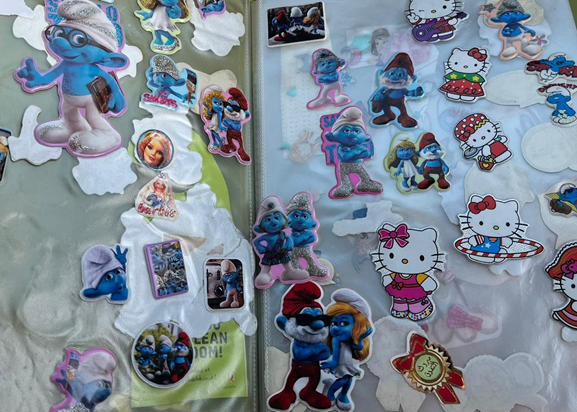
The notebook stays wrapped in plastic. The perfume is saved for a future event. The expensive candle sits untouched on a shelf. And somewhere in a childhood drawer, there’s a sticker folder with Hello Kitty, shiny butterflies, flowers, perfectly preserved for a “special day” that never arrived.
It seems harmless. Even sweet.
But why are we so afraid to finish the things we love?
The answer, according to psychologist Zuhal Alnajar, is rarely about the object itself.
“When something feels special or limited, we attach emotional meaning to it,” she explains. “Using it can feel like losing it. And loss, even small loss, is uncomfortable.”
For many of us, this habit starts early. As children, we’re taught not to waste. In homes shaped by financial instability, sanctions, or uncertainty, saving wasn’t optional, it was necessary. You stretched what you had. You kept things “for later.” You made them last.
“Our nervous system remembers scarcity,” Alnajar says. “Even if your reality has changed, your emotional memory may still operate as if resources are fragile.”
That untouched sticker sheet may not be about stickers at all. It may be about safety.
But scarcity is only one layer.
There’s also the fear of endings.
Lighting the candle means watching it slowly disappear. Writing in the perfect notebook means the first page will never be blank again. Using the last sticker means the collection is officially over.
“Endings remind us that things are temporary,” Alnajar says. “For some people, even small endings trigger a deeper discomfort with impermanence.”
So we freeze the moment before it begins. We preserve the object in its most flawless state unused, untouched, full of potential. As long as the sticker remains in the folder, the perfect moment to use it still exists somewhere in the future.
There’s comfort in that.
But there’s also avoidance.
Perfectionism often hides inside this behavior. What if you use the sticker on the wrong page? What if the occasion isn’t important enough? What if you regret it?
“Perfectionism tells us that joy must happen under ideal conditions,” Alnajar explains. “It creates the illusion that there is a ‘correct’ moment for pleasure.”
And because life rarely feels perfectly aligned, we wait.
We wait until we lose weight to wear the outfit.
We wait until we host guests to use the fancy plates.
We wait until something extraordinary happens to open the perfume.
In the meantime, ordinary days pass.
“Some people unconsciously believe they have to earn beautiful things,” Alnajar says. “They postpone enjoyment until they feel more successful, more stable, or more deserving.”
Saving becomes a quiet form of self-denial. We convince ourselves we’re being practical. Responsible. Careful.
But sometimes, we are simply afraid to let ourselves enjoy something fully.
Because enjoyment makes the moment real. And real moments are finite.
When you finally stick the Hello Kitty sticker onto a page, you accept that this is the page. This is the moment. It may not be perfect but it’s happening.
And that can feel vulnerable.
Alnajar emphasizes that using something you love is not wasteful “Objects are meant to be integrated into our lives,” she says. “When we use them, we create memories. When we preserve them indefinitely, we suspend experience.”
The irony is that in trying to protect joy, we often postpone it indefinitely.
The sticker folder doesn’t stay magical because it’s untouched. It stays incomplete.
Maybe the shift is small. Not dramatic. Not revolutionary.
Light the candle on a random Tuesday.
Write messily in the beautiful notebook.
Wear the perfume to the grocery store.
“Joy is not a limited resource,” Alnajar says. “Trusting that there will be more, more good days, more beautiful things is part of emotional security.”
Finishing something you love doesn’t erase it. It transforms it. The candle becomes a memory of a quiet evening. The notebook becomes proof that you had thoughts worth writing down. The sticker becomes part of a page you once touched.
The special day we keep waiting for rarely announces itself. It doesn’t arrive with certainty or fireworks. Often, it looks like today.
The folder was never waiting for perfection.
It was waiting for permission.