From the Feed to our Bookshelves
You’re walking around a bookstore, pulling out books at random, reading the blurbs, judging the covers. Thirty minutes pass, maybe more before you find the book you think is your next read. Nowadays, for many Gen Z readers, that moment has been replaced with something much faster: scrolling through social media and picking a book within minutes.
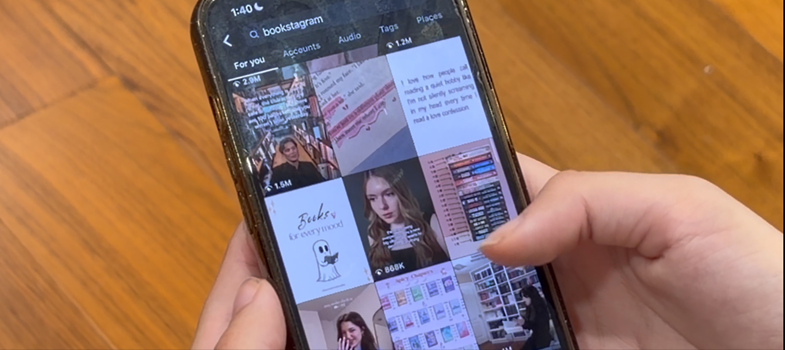
Platforms like TikTok, Instagram, and Youtube have given rise to online reading subcommunities, Booktok, Bookstagram, Booktube, that are changing Gen Z reading habits and book trends. These communities allow readers to share recommendations, reviews, and reactions in visually engaging and emotionally compelling ways.
For many young readers, the appeal of social media lies in its accessibility. “I go to TikTok because it’s easy to access,” Fatma Makki, a 20 year old reader revealed. “I just type the keyword that I want based on the book that I want. Let’s say, a good romance book or a psychology-related book, and straight away, I’d get different videos of recommendations.”
This shift hasn’t just changed how books are discovered, it’s changing the books we choose to read. Reading content varies from in depth summaries and reviews, to short emotional videos such as a crying reaction, a highlighted quote, a dramatic ‘this book ruined me.’ This has contributed to the rise of certain genres, such as romantasy, a mix of romance and fantasy. According to Steve Jones, Marketing/Store/Merchandising Manager at Kinokuniya, “Romantasy and romance are currently among the biggest literary trends, both in the Arab world and the Western market.”
Social media can turn unknown books into bestsellers overnight, or repopularize older titles. Classics, such as Wuthering Heights by Emily Brontë, and other forgotten titles can experience a resurgence, giving books a second life. Makki noted a striking example of the novel It Ends With Us by Colleen Hoover. The book went viral on TikTok years after its initial publication in 2016, eventually inspiring a movie adaptation in 2024. “Everyone started reading it because it became trendy,” Makki said.
However, this algorithm-driven change in reading habits comes with the risk of oversaturation of content. “Actual readers on TikTok have been recommending books that are not really that famous, but no one has ever paid attention to them,” Makki remarked. As platforms reward fast-paced, aesthetic, and emotional content, this creates a reading culture where literature diversity can be overshadowed by trends and virality, rather than quality.
While viral trends can drive sales initially, with everyone rushing to buy them, they are not always reliable factors of quality. Jones noted, “the quality and theme of a book are equally important. I have seen poorly written titles go viral, only for readers to abandon them once negative reviews spread.”
The social media effect can be observed worldwide, however English books tend to dominate the feeds, overshadowing titles in other languages. “English books get the most attention and Arabic titles rarely reach the same level of visibility,” Makki remarked. This limits the diversity of books that gain widespread recognition on social media.
Another important question is whether social media fosters a genuine love of reading, or simply turned it into a trend. Makki offered her perspective saying, “People get influenced very easily, so I think that’s one of the main reasons why people started reading because reading became a trend on BookTok.” For many, what starts as a trend can gradually turn into a genuine habit or eventually fizzle out.
Bookstores have also adapted to this shift in reading habits through their sales choices. “We have tables dedicated to BookTok,” Jones added, “the business model simply adapts to new mediums, and it will continue to evolve in the same way.” According to Jones, while they put focus on trending books they aim to “balance between commerce and culture.”
At the end of the day, even if readers swap library aisles with TikTok feeds, the end goal remains the same: to find a book that means something to us. Whether it appears through a 15 second video, or hidden in a library shelf this is what keeps the world of books alive.